



There is a sound I still hear sometimes when I am trying to get something right. It is small and rhythmic, almost like a whisper. P, p, p. Then a pause. P, p, p.
I was four or five years old, sitting on the floor of a Montessori classroom, learning to roll up a mat. The task sounds trivial, and in one sense it is. But my teacher understood something I would spend the next five decades slowly confirming: how you do the small thing is how you do everything.
The problem with rolling a mat is that if you simply roll it, it drifts. One side gets ahead of the other. The cylinder goes crooked. So they taught us to use our hands, alternating left and right, gently pushing each side forward as the mat came up. P, p, p for the right side. A different sound, softer, for the left. The whole practice was about correction in real time, small adjustments made continuously, each one almost invisible, the sum of them making all the difference.
I did not have words for this then. I do now. But the feeling was already in my hands.
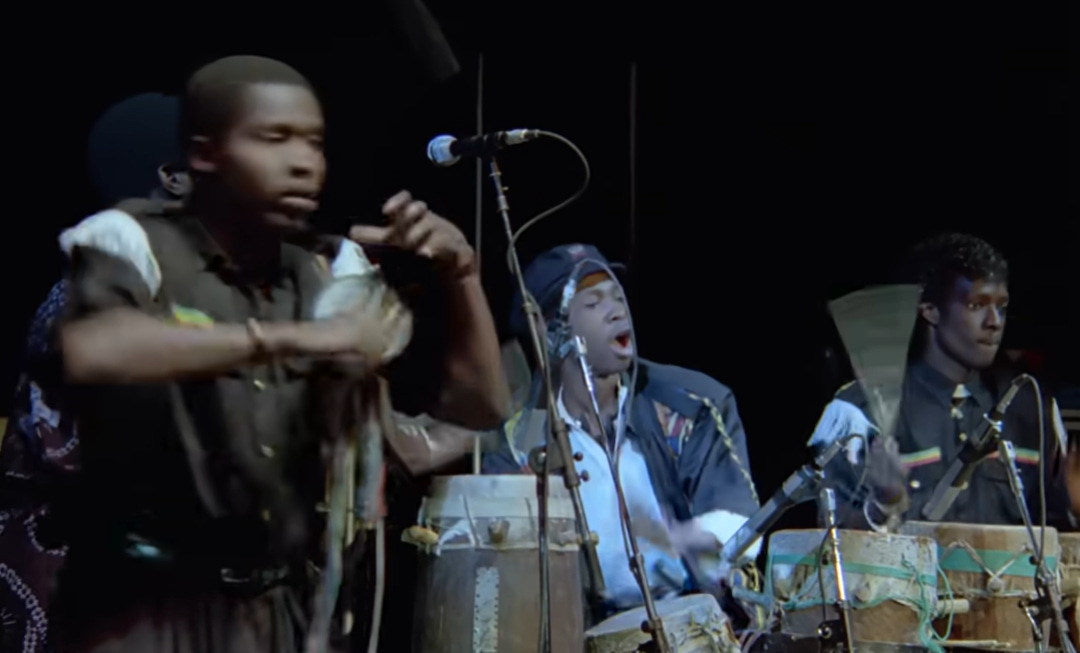
Youssou N'Dour - Immigres (Live in Athens 1987)
In 1991, I moved to Senegal. I was a young musician, already listening for rhythm everywhere, but nothing had prepared me for what I heard there. West African music does not sit on the beat the way Western music does. It lives in the space around it. The Sabar player raises a stick and there is an infinite amount of time between that moment and when it lands. Each fraction of a second produces a subtly different feeling in the listener’s body. Land exactly on the metronome click and the music sounds mechanical, correct but lifeless. Nudge it slightly forward or back, and something shifts. The music breathes.
But timing is only part of it. These traditions are conversations. The Sabar player throws a phrase into the air and someone answers. A singer calls and the drums respond. There is humor in it, and surprise, and a kind of collective intelligence that no single player could produce alone. The space between the beats is not just where the individual musician lives. It is where the players find each other.
I had first felt this years earlier, watching Les Ballets Africains from Guinea perform in Madison, Wisconsin. I was young and I did not understand what I was feeling. I just knew that something in that music was reaching into me and pulling. It was the same feeling I would later find in Brazilian samba reggae, Cuban rumba, New Orleans brass bands, and many other traditions across the world. The African diaspora carried this understanding everywhere it traveled: the beat is not the point. The space between the beats is where the music actually lives.
This is also, I have come to believe, where everything else lives. The breath before a difficult conversation. The pause between receiving bad news and deciding how to respond. The moment after a company’s best-laid plans dissolve and before the founder decides what to do next.
Here is something nobody tells you about being a musician: it is exactly like running a startup, except nobody is offering you a million dollars and a profile in TechCrunch.
You build something from nothing. You find collaborators and manage creative differences. You figure out your audience, your pricing, your positioning, what musicians call finding your sound and what founders call product-market fit. You do your own marketing. You negotiate. You go back out after a bad show the same way a founder goes back into investor meetings after a hard quarter. The craft requirements are identical. The vulnerability is identical. The hustle is identical.
What music taught me, and what Montessori had already begun to teach me before I had language for it, is that none of this can be learned from a book. You can read about rhythm. You cannot read your way into feeling it. You have to play. You have to be coached by someone whose hands already know what yours are still learning. You have to make the mistake, feel the mat go crooked, hear the music go flat, and correct it. Then do it again. Across cultures and centuries, the deepest knowledge has always traveled this way, hand to hand, generation to generation, through presence and repetition and the particular patience of a teacher who shows you rather than tells you.
And yet the way we fund founders today largely skips this. The check arrives. The founder is left alone with the problem. And the cycle begins again.
On Teachers
Funding a founder is an act of faith. You are betting on a person, on their resilience and judgment and capacity to learn and listen, usually before any of those things have been fully tested. That is not a flaw in the model. It is the nature of early stage investing. You cannot know in advance who will figure it out.
But there is a question worth sitting with. What if the knowledge needed to figure it out already exists, somewhere, in someone, and we simply never built the bridge to carry it across?
Every generation of founders makes a set of mistakes. Some are unique to their moment, their market, their technology. But many are not. Many are the same mistakes the last generation made, and the generation before that. The founder who ran out of runway because she scaled too early. The one who lost his co-founder because they never had the hard conversation about equity. The one who pivoted too late, or too soon, or in the wrong direction, not because she lacked intelligence but because nobody who had already been through it was close enough to say something in time.
This is not a failure of venture capital. It is a structural gap. The check arrives. The introductions get made. And then the founder is largely alone with the problem, which produces a certain kind of resilience in the people who survive it. But it also produces an enormous amount of avoidable loss.
The oldest human traditions understood something about this that we are only beginning to recover. In West Africa, in Cuba, in Brazil, the elder drummer did not hand the apprentice a drum and leave the room. He stayed. He played alongside. He modeled the thing that cannot be written down and waited for the student’s body to find it. That process took years. It was not efficient in any way a spreadsheet could measure. And it produced musicians whose knowledge would survive them by generations.
Montessori understood the same thing. The classroom was not a place where children received instructions and then executed them alone. It was a place where learning happened in relationship, between child and teacher, between older and younger students, between the hand and the mat and the sound that told you whether you were getting it right.
What would it look like to build that into the infrastructure of how we support founders? Not to replace the capital, but to surround it with the kind of sustained, intergenerational guidance that turns a single founder’s hard experience into something the next cohort can actually use. So that the mistakes still get made, because they will, but the knowledge they produce does not disappear with the company that generated it.
That is not a critique of how things have been done. It is an invitation to add something that has always been missing.
On Community
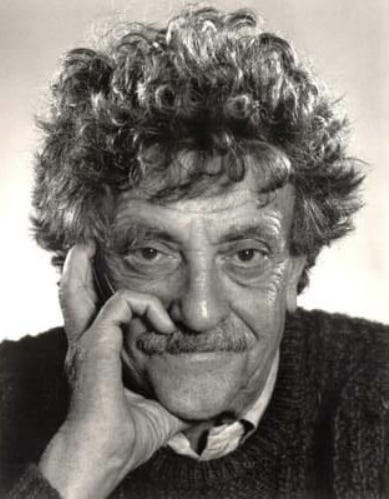
Kurt Vonnegut spoke at Stanford sometime in the late 1990s. I was in the audience. He was funny and sad in the way he always was, and he said something that has stayed with me ever since. He talked about the breakdown of the extended family in America, how modernity had scattered people, how the nuclear family left alone to fend for itself was too small a unit to bear the weight of everything life throws at it. He wasn’t being nostalgic. He was being accurate. When the village dissolves, people don’t become more independent. They become more isolated. And isolation, dressed up as self-reliance, becomes its own kind of hubris.
In deep tech, this was never even a question. You cannot build a fusion reactor alone. You cannot navigate regulatory approval with a laptop and enough compute. The laboratory, the supply chain, the investor, the customer, the regulatory body, they are not obstacles to building. They are the building. Community was never optional here. It was always the architecture.
A smart founder once told me that top tier founders would never join an accelerator because they already know what they need. I told him that if they are truly top tier, they know they need other people to succeed. The ones who believe they don’t are not demonstrating strength. They are demonstrating exactly the kind of lonely hubris Vonnegut was describing from that stage in Palo Alto a quarter century ago.
What we are trying to build at the Berkeley Gateway Accelerator is not a program. It is a community in the oldest sense of the word. Real relationships. Real accountability. Real knowledge passing between generations of founders, between people who have failed and people who are about to, between disciplines that have never been in the same room before. Not a substitute for something lost. The actual thing, rebuilt, because the need for it never went away.
The sabar player does not make music alone. Neither does the founder who changes the world. And yet even the best communities, the best teachers, the most carefully rolled mat, cannot account for everything.

And then there is luck. I want to be honest about this because most writing about entrepreneurship is not.
You can do everything right and still miss the bus. I have watched founders build something real and careful and good, only to have a government policy shift overnight and take the market with it. I have seen timing kill companies that deserved to survive. The bus does sometimes come back, but later, when you are a different person standing at a different stop.
You have to live with your choices. You do not always get to know what the other branch of the decision would have produced. There is real loss in this, real pain, and I think it does founders a disservice to pretend otherwise.
But here is what I have also seen, in music and in business and in life: the people who keep going are not the ones who have figured out how to avoid the loss. They are the ones who have developed a practiced faith in the next moment. Not blind optimism. Something harder and quieter than that. The knowledge, earned through repetition, that there will be another shot. That the work itself, the showing up, the rolling of the mat, the raising of the stick before it falls, is not separate from the purpose. It is the purpose.
Imposter syndrome is real. The fear is real. The uncertainty never fully goes away, not for musicians, not for founders, not for anyone building something that did not exist before they made it. If it were easy, everyone would do it.
What carries you through is not certainty. It is the small correction, made again, and again, and again. P, p, p. The hands finding the edge of the mat. The stick dropping a half-breath late, making the music human. The decision to take the next shot without carrying the weight of the last one into it.
The space between the beats is not empty. It is where we find each other.
This post was written with support from Claude and some images were created in Midjourney
And then there is luck
Wow! This post gave me goosebumps! I could feel it: the space between the beat.